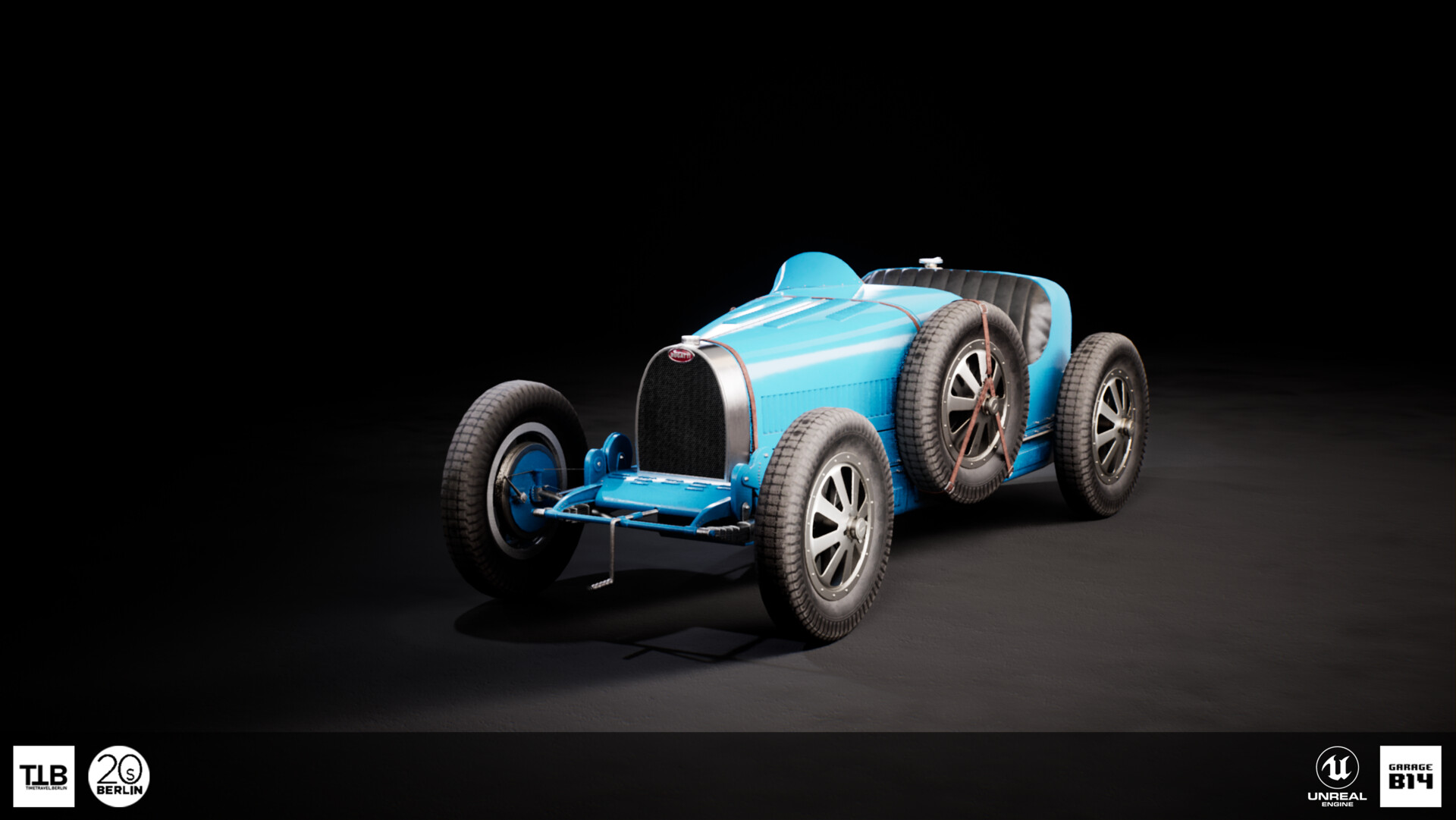
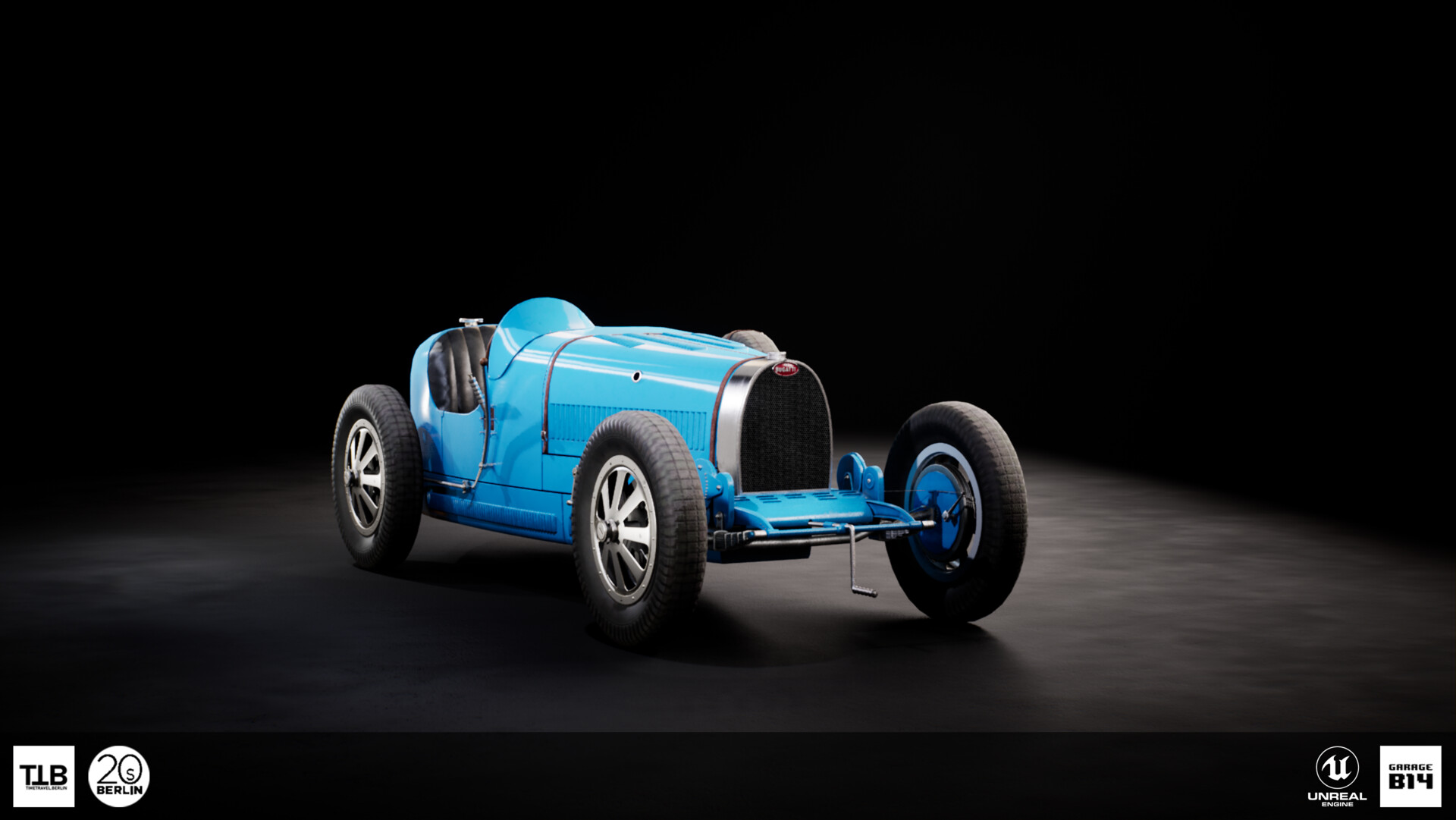
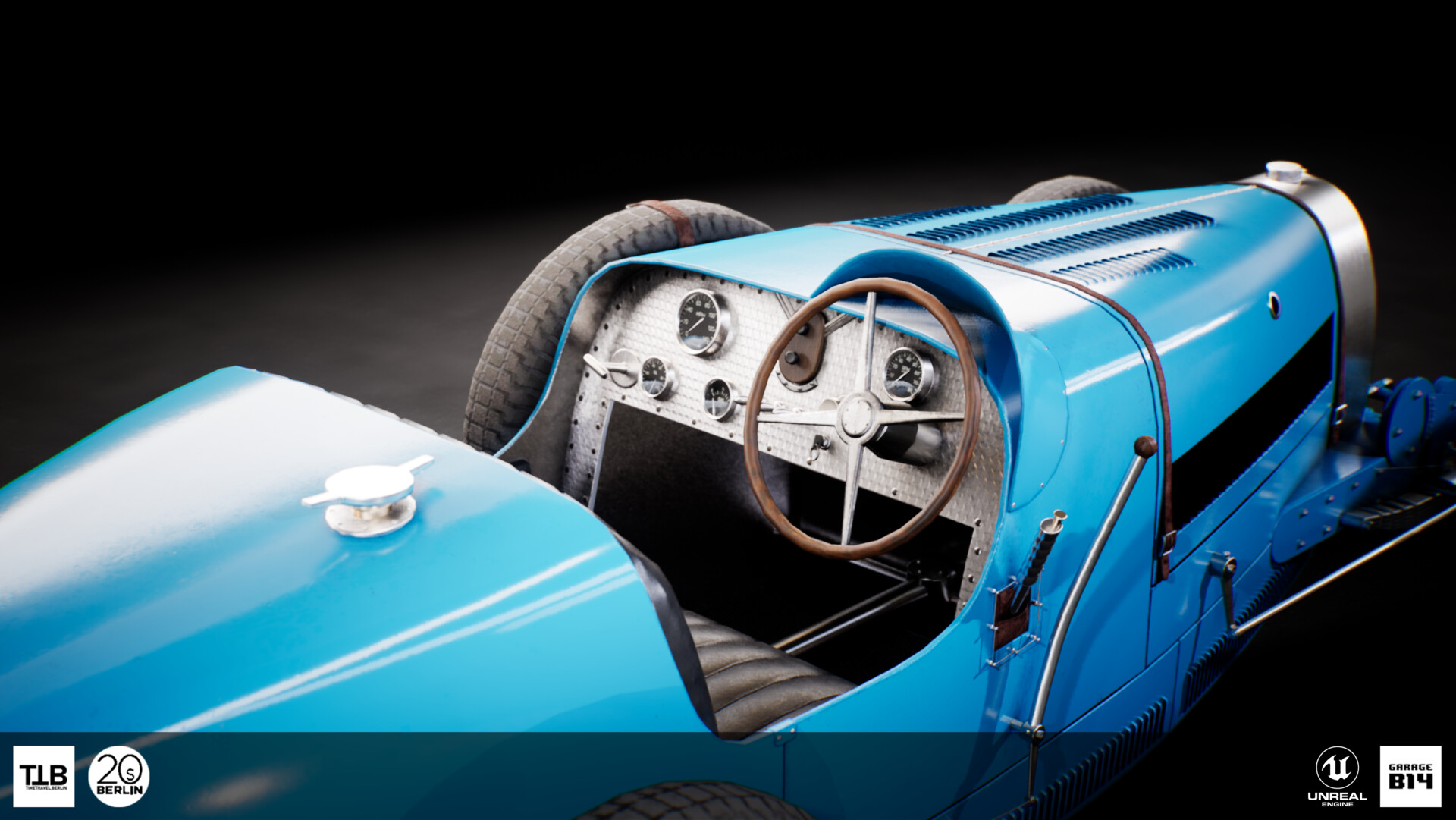
1920's Bugatti Type 35
The Bugatti Type 35 is one of the icons of Bugatti’s rich history and tradition. Back in 1924, the sports car was unparalleled in its technology, design and performance and the same still goes today. It is both an inspiration and a commitment,” says Stephan Winkelmann, President of Bugatti. “This makes the Type 35 one of the forefathers of our current hyper sports cars, the Chiron1, Chiron Sport2 and Divo3. Steeped in the Type 35’s DNA, they are translating this tradition for the modern age.
The Type 35 was not just a racing car. It was a technical masterpiece: For the first time ever, the company’s founder Ettore Bugatti used a crankshaft supported by two roller bearings and three ball bearings – and this crankshaft is still seen as a feat of engineering to this day. It could run at speeds of up to 6,000 rpm to power the eight pistons in the engine, which started out with a capacity of just 2.0 litres. At the time, it was one of the only car capable of achieving such power. Thanks to other changes – such as using two carburettors instead of one – the car’s power increased to around 95 PS, which was transmitted by a wet multi-plate clutch. The drive system in the first versions of the Type 35 was able to achieve speeds of over 190 km/h. The less expensive basic model, the 35A, was based on a 2.0-litre eight-cylinder engine with 75 PS. In its later iteration, the Type 35 B (which had a 2.3-litre eight-cylinder engine and compressor), the Bugatti’s power increased to up to 140 PS and its top speeds exceeded 215 km/h. As well as their incredible performance, the engines were primarily renowned for their reliability and endurance.
Even in the early 1920s, Ettore Bugatti had come to realise that, while plenty of power may be helpful, it has little effect in a heavy car. That’s why he relentlessly pursued lightweight construction and the best driveability possible in his cars – more than any other engineer in the world of motor sport. Bugatti was the first to develop special smooth-running wheels to reduce the unsprung masses and, as a result, improve the response of the suspension. The wheels – made from cast aluminium with eight flat ribbon-style spokes, detachable rims and an integral brake drum – were an innovation. A rim ring stopped the tyre from popping off.
This is one of the models that was made for the "Time Travel Berlin" VR game where you can travel to 20's Berlin streets.
With this travel machine, you can move to the 20th century.